Segal Survey Projects Health Plan Cost Trend to Reach 15-Year Historic Highs Driven by GLP-1s, Inflation, AI, and Surprise Billing Arbitration
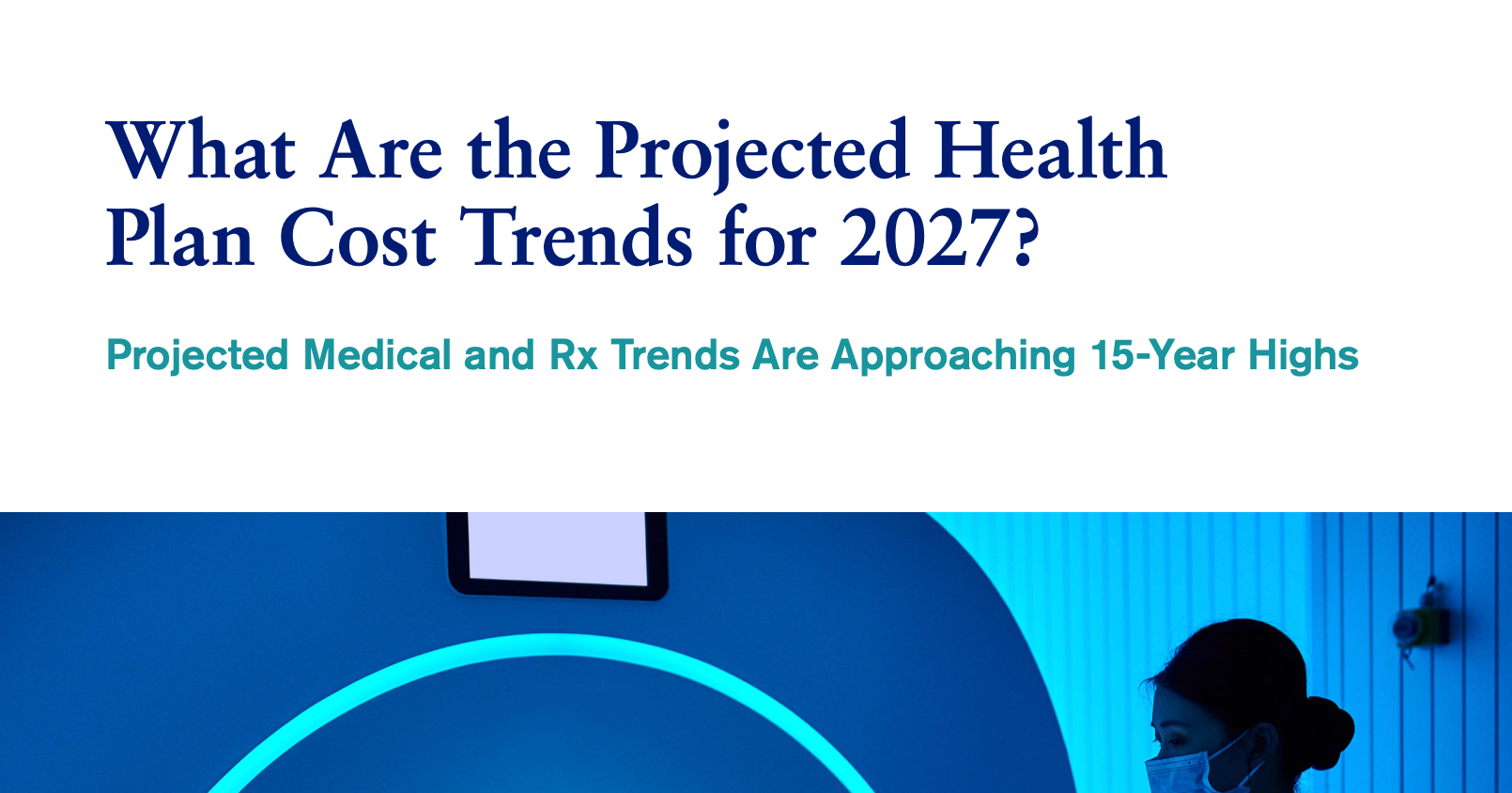
Segal’s 2027 Health Plan Cost Trend Survey projects that the median cost trend for employer-sponsored medical plans will reach 9.9%, approaching a 15-year high, while prescription drug costs are expected to rise 11.5%. Based on responses representing more than 80% of the commercially insured and self-insured market, the survey attributes the acceleration to specialty medicines, expanding GLP-1 anti-obesity indications, provider consolidation, inflation, AI-enabled coding intensity and costly No Surprises Act arbitration outcomes. Segal estimates that increased coding intensity accounts for approximately 20% of inpatient cost growth, while providers prevail in 88% of Independent Dispute Resolution disputes, contributing an estimated $5 billion in system costs since 2022. For employers and Taft-Hartley plans, the findings signal that conventional benefit renewal negotiations may no longer be sufficient. Plan sponsors will increasingly need claims analytics, transparent PBM contracts, optimized provider networks, direct contracting and site-of-care strategies to control spending without simply shifting more costs to employees.
NEW YORK---
Segal, a leading benefits and HR consulting firm, today issued the
2027 Segal Health Plan Cost Trend Survey. The 30
th annual survey report reveals that health plan cost trends for employer-sponsored benefits are approaching their highest levels in 15 years, with the median trend for medical plans expected to reach 9.9 percent.
Segal’s comprehensive survey represents over 80 percent of the commercially insured and self-insured market and reveals a variety of forces accelerating health plan costs behind the scenes: inflationary pressure, AI implementation, a broken dispute resolution process and increasing consolidation in the market.
“We have seen elevated medical trends for several years, but costs now feel like they’re reaching a breaking point,” said Edward Kaplan, National Health Practice Leader and Senior Vice President at Segal. “Employers and Taft-Hartley plans are under intense cost pressures to manage the affordability of wage increases, price inflation and health benefit commitments, forcing more difficult choices for decision-makers.”
Key findings from the 2027 Survey:
The pharmacy surge. Prescription drug trends are projected at 11.5 percent, driven by surging specialty drug costs and expanding indications for GLP-1 anti-obesity medications.
Industry consolidation. Increasingly concentrated market power and the expansion of private equity interests in healthcare have led to higher prices and increased utilization.
AI impacts. Increased coding intensity, without corresponding changes to patient care, is driving approximately 20 percent of inpatient cost growth.
No Surprises Act arbitration. The Independent Dispute Resolution (IDR) arbitration process has drastically favored providers, generating an estimated $5 billion in system costs since 2022.
“Medical providers prevail 88 percent of the time in No Surprises Act disputes, at costs much higher than standard in-network rates,” said Eileen Flick, Leader of Healthcare Informatics and Senior Vice President at Segal. “These outcomes are fueling unnecessary cost growth across the healthcare system. It’s imperative that plan sponsors have visibility into these outcomes and are armed with the information necessary to better navigate this complex process.”
Cost management solutions:
Plan sponsors are pivoting toward direct, hard-dollar savings strategies. The report identifies the top cost-management protocols being implemented, which include:
Network optimization: Deploying narrow networks, direct contracting, risk sharing and centers of excellence to focus on preferred providers.
Transparent contracting: Moving away from inflationary, rebate-driven models toward transparent, pass-through pricing arrangements with pharmacy benefit managers (PBMs).
Site of care steerage: Shifting patient volume from high-cost hospital environments to lower-cost settings like ambulatory surgical centers (ASCs) or home infusions.
“There has never been more information available, including transparency, plan and claims data for plan sponsors to leverage,” said Eric Miller, Vice President and Consulting Actuary at Segal. “While the feeling of exasperation is palpable throughout the economy, there is benefit to taking an active role in managing plan costs through strategies that are targeted and data informed.”
Additional details, experience exhibits and cost-management strategies are available in the
2027 Segal Health Plan Cost Trend Survey report.
About the Segal Health Plan Cost Trend Survey
Recognized as one of the most definitive surveys on employer-sponsored health plans, the Segal survey is now in its 30
th year. The survey provides industry-leading insights on healthcare costs and guidance for how plan sponsors can manage those costs for their plan and people. Survey participants include health insurers, managed care organizations (MCOs), pharmacy benefit managers (PBMs) and third-party administrators (TPAs). Survey respondents represent about 80 percent of the commercially insured and self-insured market. Respondents shared their trend forecasts for medical, prescription drug, dental and vision coverage and actual health cost trends based on their group health plan experience.
This survey is for informational purposes only and does not constitute consulting, legal, tax or investment advice. Readers are encouraged to discuss the issues raised in the survey with their own legal, tax and other advisors before taking or refraining from taking any action.
About Segal
Segal delivers trusted advice that improves lives. Segal is a privately owned benefits, human capital, communications, technology, insurance brokerage and investment consulting firm with more than 1,000 employees throughout the U.S. and Canada. Segal, Segal Marco Advisors and Segal Benz are all members of the Segal family.









 Back
Back

 X.com
X.com