OpenAI has appointed Arvind KC as its new Chief People Officer (CPO), a move that signals a decisive shift in how leading AI companies are thinking about scale, governance, and long-term competitive advantage. In an era where artificial intelligence is rapidly transforming work, the strategic importance of organizational design is rising to the same level as model innovation.
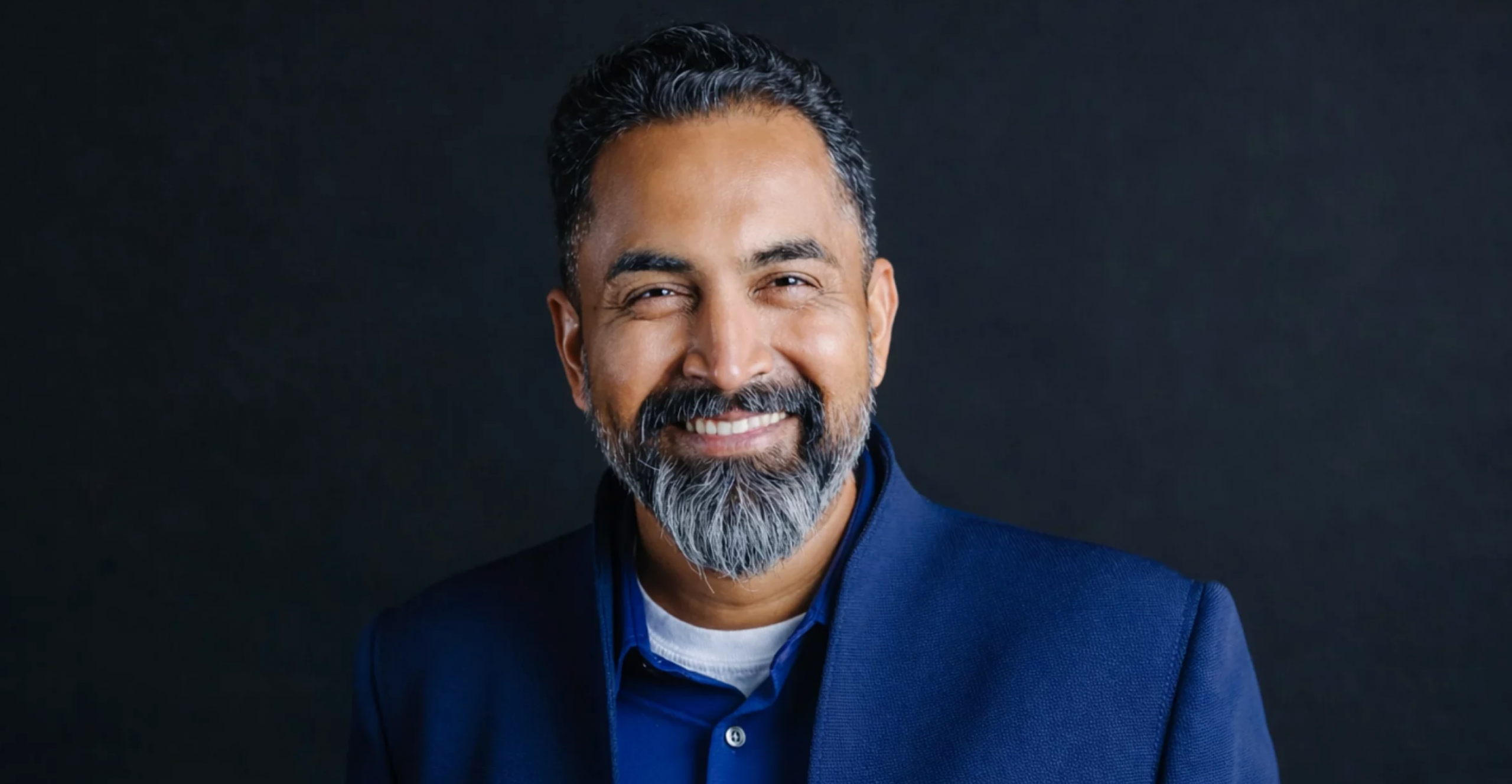
From a global HR technology perspective, this appointment is less about filling a leadership role and more about formalizing a new phase of maturity: the transition from AI research powerhouse to AI-native enterprise.
A Systems Leader, Not a Traditional HR Executive
Arvind KC’s career trajectory is particularly noteworthy. He is not a career HR executive shaped primarily by talent operations or employee relations. Instead, his background sits at the intersection of engineering, enterprise systems, and organizational infrastructure.
Prior to joining OpenAI, KC served as Chief People and Systems Officer at Roblox starting in July 2023. The title itself reflects a forward-looking philosophy: people strategy and enterprise systems are inseparable in modern organizations. At Roblox, he oversaw talent strategy while integrating people systems and operational architecture—an experience directly relevant to OpenAI’s current scale and complexity.
Before Roblox, KC spent nearly four years at Google (July 2019 – June 2023) as Vice President, Engineering. In that role, he managed large engineering teams and contributed to technical strategy execution within one of the most sophisticated product and infrastructure environments in the world. This period strengthened his experience in scaling technical organizations while maintaining operational discipline and innovation velocity.
From December 2014 to June 2019, KC served as Chief Information Officer (CIO) at Palantir Technologies in Palo Alto, California. As CIO, he led enterprise information systems and technology infrastructure—critical components in a data-intensive, security-focused company. This experience embedded a systems-oriented mindset around data governance, internal tooling, and enterprise architecture.
Earlier in his career, from April 2011 to November 2014, KC was Director of IT at Facebook (now Meta) in Menlo Park, California. Notably, during his tenure at Facebook, he led teams of product managers, engineers, and data analysts to build enterprise solutions supporting HR, Recruiting, Sales & Marketing, Infrastructure, Legal, and Security functions. This experience represents an early and direct intersection between technology and people operations—laying groundwork for his later transition into people leadership roles.
From September 2008 to April 2011, he served as Director, Operations Business Solutions at Xilinx, where he focused on operational systems and enterprise solutions.
The throughline across these roles is clear: KC has consistently built and scaled enterprise systems that enable organizations to function efficiently. His move into a Chief People Officer role represents an evolution rather than a departure—extending system thinking into organizational architecture and talent strategy.
Why This Matters for OpenAI
OpenAI is no longer solely a frontier research organization. It is a multi-product, multi-stakeholder global enterprise with enterprise customers, developer ecosystems, policy considerations, and a rapidly expanding workforce.
As generative AI reshapes workflows, skill requirements, and team structures, OpenAI faces internal questions that mirror those confronting its customers:
How should roles evolve in an AI-enabled workplace?
What skills must be retrained, augmented, or automated?
How should performance be measured in human-AI collaboration environments?
How can culture scale without eroding innovation velocity?
These are not administrative HR questions; they are organizational system design challenges.
By appointing a leader with deep enterprise systems and engineering experience, OpenAI is positioning its people function as a strategic architecture layer—aligned with product, infrastructure, and AI deployment strategy.
The Rise of the Systems-Oriented CPO
Across the technology sector, the role of the Chief People Officer is undergoing structural transformation. In high-innovation, high-growth environments, talent density and cultural coherence are directly correlated with product velocity and long-term defensibility.
In AI-native companies, the stakes are even higher. Organizations must continuously redesign job families, integrate AI agents into workflows, manage ethical considerations, and retrain employees at scale.
A systems-oriented CPO—someone who understands engineering, data, and enterprise architecture—is uniquely positioned to manage this complexity. KC’s background suggests OpenAI is betting that future workforce strategy will require technical fluency and structural thinking as much as traditional people leadership.
Implications for the Global HR Community
From a global HR leadership standpoint, this appointment reinforces three major trends:
First, technical literacy is becoming a core competency for HR executives. Understanding AI infrastructure, automation, and data systems is no longer optional at the leadership level.
Second, people strategy is converging with enterprise architecture. HR systems, learning platforms, performance frameworks, and workforce analytics must integrate seamlessly with broader digital ecosystems.
Third, the next frontier of HR technology lies in designing AI-native organizations—where human capability, machine augmentation, and governance are dynamically aligned.
OpenAI’s decision to appoint Arvind KC as Chief People Officer is therefore not just a leadership announcement. It is a signal that in the AI era, organizational system design is a strategic differentiator.
As AI continues to reshape industries, the companies that win will not simply build the best models. They will design the most adaptive organizations.

Subscribe to our newsletter and never miss our latest digital HR news!
By signing up to receive DHRmap newsletter, you agree to our Terms of Use and Privacy Policy. You can unsubscribe anytime.








We have placed cookies on your device to help make this website better. You can adjust your cookie settings, otherwise we'll assume you're okay to continue.

 Back
Back

 X.com
X.com