An artificial intelligence hiring platform widely used by large U.S. employers is facing a proposed class action lawsuit that could have far-reaching implications for how AI tools are regulated in recruitment.
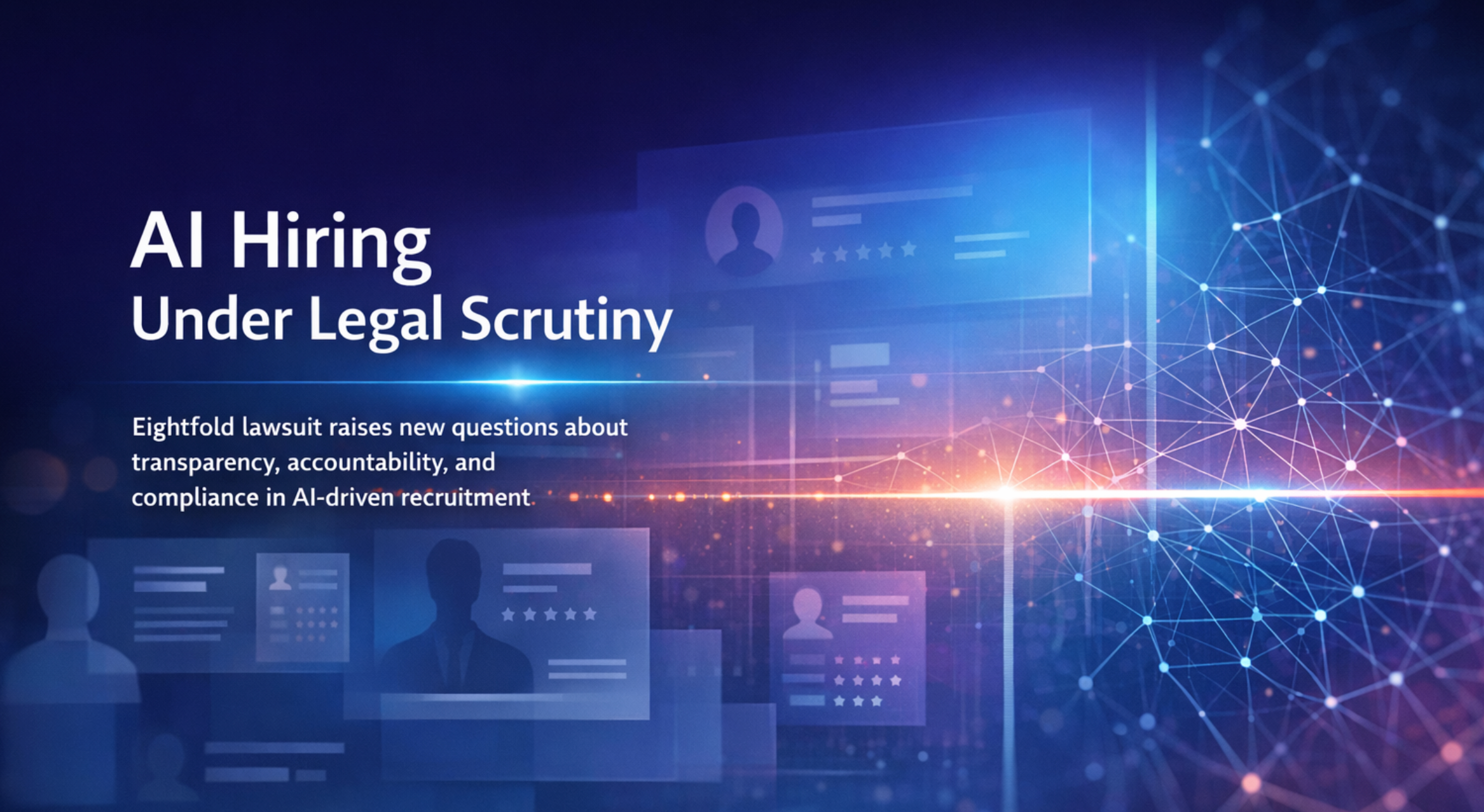
On January 21, 2026, Eightfold AI, a Silicon Valley–based talent intelligence company, was sued in California state court by two job seekers who allege the company violated the federal Fair Credit Reporting Act (FCRA) and related state consumer protection laws. The plaintiffs claim Eightfold generated and provided AI-driven assessments of job applicants that were used in hiring decisions without applicants’ knowledge or an opportunity to review or dispute the information.
According to the complaint, Eightfold’s technology creates detailed talent profiles based on resumes and job-related data, including inferred personality traits, assessments of educational quality, job fit rankings, and predictions about future career paths. The lawsuit alleges that these assessments function as “consumer reports” under FCRA because they are produced by a third party and used by employers to evaluate candidates for employment.
Eightfold has stated that its platform relies on data provided by candidates or its customers and does not scrape social media or unrelated online sources. A company spokesperson emphasized Eightfold’s commitment to responsible AI practices, transparency, and compliance with applicable employment and data protection laws. The company has not admitted wrongdoing, and the case remains in its early procedural stages.
Notably, the lawsuit does not name any employers as defendants, even though Eightfold’s customer base reportedly includes a significant number of Fortune 500 companies as well as public-sector workforce programs. The plaintiffs are represented by employment law firm Outten & Golden and nonprofit advocacy group Towards Justice.
Why the Case Matters
While the outcome of the litigation remains uncertain, legal observers say the case raises a foundational question for the HR technology sector: when does an AI hiring system move beyond being a neutral tool and become a regulated third-party evaluator under existing law?
Unlike many prior challenges to hiring algorithms, the Eightfold lawsuit does not focus on whether the technology produces biased outcomes. Instead, it centers on procedural obligations—specifically whether candidates should be notified when an AI system generates evaluative reports about them, and whether they should have rights to access and correct those assessments. That distinction may lower the legal threshold for scrutiny, as it avoids the need to prove discriminatory intent or disparate impact.
The case also follows earlier litigation involving other HR technology providers, signaling a broader judicial willingness to examine how automated systems influence employment decisions. Together, these developments suggest that courts may increasingly rely on existing employment and consumer protection statutes to address AI-driven hiring practices, rather than waiting for new, AI-specific legislation.
Implications for Employers and HR Leaders
For now, employers that use Eightfold or similar platforms are not parties to the lawsuit. However, experts note that the absence of employer defendants at this stage does not eliminate risk. If courts ultimately determine that certain AI-generated hiring assessments fall under FCRA or similar laws, employers may be required to reconsider how these tools are deployed, disclosed, and governed within their hiring processes.
More broadly, the case highlights a shift in expectations around transparency and accountability in AI-assisted hiring. As automated evaluations become more sophisticated and influential, HR leaders may face increasing pressure to understand not only what their technology vendors offer, but how those systems affect candidate rights and compliance obligations.
Whether the Eightfold case becomes a landmark precedent or is resolved more narrowly, it underscores a growing reality for the HR technology ecosystem: AI in hiring is no longer viewed solely as an efficiency enhancer, but as a decision-support infrastructure that may be subject to long-standing legal frameworks.
DHRMap will continue to monitor developments in this case and their implications for HR technology, compliance, and workforce strategy.

Subscribe to our newsletter and never miss our latest digital HR news!
By signing up to receive DHRmap newsletter, you agree to our Terms of Use and Privacy Policy. You can unsubscribe anytime.





We have placed cookies on your device to help make this website better. You can adjust your cookie settings, otherwise we'll assume you're okay to continue.

 Back
Back

 X.com
X.com