New Research: 92% of HR Professionals Believe Employees Can Be Reskilled for AI Jobs, Yet External Hiring Outpaces Redeployment - PR Newswire
Careerminds, in partnership with Censuswide, surveyed 1,142 U.S. HR professionals and people managers and found that 92% of HR pros believe current employees can be reskilled for AI-related roles — yet 51% say their organizations are hiring externally for those same positions, versus just 42% redeploying existing staff. The November 2026 white paper, 'The AI Redeployment Gap,' also reveals a sharp ownership dispute: 63% of HR professionals say HR is responsible for AI workforce planning, while only 24% of people managers agree.
Key facts
- 92% of HR professionals believe employees at their organizations could be reskilled for AI-related roles.
- 88% of people managers share that belief.
- 51% of HR professionals report their organizations are hiring externally for new AI positions; only 42% report redeploying existing employees.
- 47% of people managers report external hiring for AI roles; 42% report redeployment.
- 43% of HR professionals and 34% of people managers report limited visibility into which employees should be reskilled.
- 63% of HR professionals say HR owns AI workforce planning; only 24% of people managers agree.
- In Tech & Telecom, external hiring outpaces redeployment by 15 percentage points.
- Media & Entertainment is the only sector where redeployment matches or exceeds external hiring (56% vs. 25% among HR professionals).
- Research firm Censuswide surveyed 1,142 U.S. HR professionals and people managers at 500+ employee organizations, May 15–26, 2026.
- Third-party data cited in the white paper suggests external hires cost 3–5x more and take up to 20 days longer than internal fills.
A new Careerminds study is putting a number on what many workforce strategists have long suspected: organizations say they believe in their people's ability to adapt to AI, but their hiring behavior tells a different story.
The global workforce solutions provider, in partnership with research firm Censuswide, surveyed 1,142 U.S. HR professionals and people managers at organizations with 500 or more employees between May 15 and 26, 2026. The findings, released November 4 in a white paper titled 'The AI Redeployment Gap: What Companies Lose by Hiring over Reskilling,' reveal a persistent confidence-action disconnect across industries.
**High Confidence, Low Follow-Through** According to the research, 92% of HR professionals and 88% of people managers believe their employees could be reskilled for AI-related roles. Yet when it comes to actually filling new AI-driven positions, 51% of HR professionals and 47% of people managers say their organizations lean toward external hiring — compared with just 42% in each group who report redeploying existing employees.
The gap grows murkier when organizations are asked to assess their own behavior. Some 87% of HR professionals and 84% of people managers believe their organizations adequately consider reskilling employees for future roles — a perception that appears to coexist uneasily with actual hiring patterns.
**Visibility Is a Bottleneck** One structural barrier may be a lack of skills intelligence. Approximately 43% of HR professionals and 34% of people managers report limited visibility or uncertainty about which employees should be reskilled — suggesting that even organizations willing to redeploy may lack the data infrastructure to do so effectively.
"Companies are investing in AI while potentially overlooking one of their most valuable resources: the people they already employ," said Mark Saddic, Senior Partner at Careerminds. "Our research shows that organizations largely believe their employees can adapt to AI-driven change, but that confidence isn't consistently translating into opportunities. Before looking outside the organization, leaders need to understand the skills they already have, identify where employees can grow, and establish a clear process for making those transitions possible."
**A Leadership Accountability Vacuum** The research also surfaces a significant governance gap. Nearly two-thirds (63%) of HR professionals say HR holds primary responsibility for planning and managing AI-driven workforce changes — but only 24% of people managers agree. Instead, 35% of managers point to senior leadership outside HR. That fragmentation, the report suggests, may be compounding organizations' difficulty in acting on reskilling intentions.
**Industry Divergence** The picture varies considerably by sector. Technology and Telecom shows the sharpest external-hiring bias, with external recruitment outpacing redeployment by 15 percentage points among both HR professionals and people managers. Media and Entertainment, by contrast, is the only industry surveyed where both groups report redeployment occurring at least as frequently as external hiring; 56% of HR professionals in that sector report redeploying employees, versus just 25% hiring externally.
**The Cost of Looking Outside First** Careerminds cites separate research from The Josh Bersin Company — referenced within the white paper — indicating that external hiring can cost three to five times more than filling comparable roles internally and take up to 20 days longer to complete.
The company recommends that organizations establish clear accountability for AI workforce planning, invest in skills visibility tools to identify internal candidates for redeployment, and build structured processes to evaluate internal development pathways before turning to external recruitment.
The full white paper is available at careerminds.com/redeployment-gap.
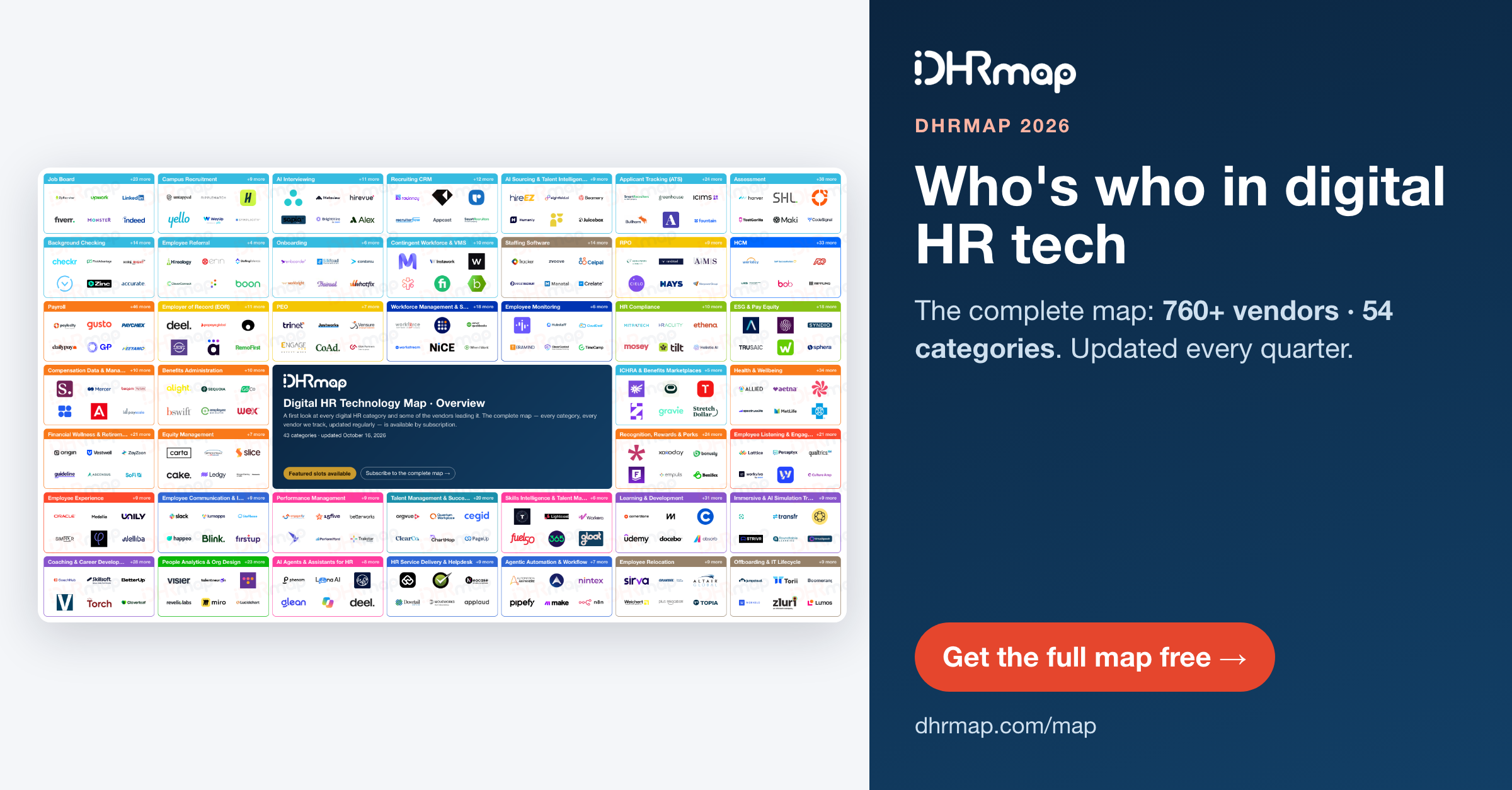
Verified vendor profiles for the companies named above — DHRMap wires every story to its directory.


DHRMap tracks every HR-tech company over time — here's the rest of the coverage.
As AI reshapes job profiles across every industry, organizations face a make-or-buy decision for talent at unprecedented scale. This research quantifies how widely the stated belief in reskilling diverges from actual workforce investment decisions — and flags skills visibility gaps and unclear ownership of AI planning as the operational culprits. For HR leaders, the data makes the business case for internal mobility infrastructure; for HR tech vendors, it signals demand for skills intelligence and workforce planning tools that can convert reskilling intent into action.
Work at Careerminds? Claim the profile — free · Get featured on DHRmap — from $1,000/year
Have HR-tech news? Submit it free · Publish a Sponsored article — $300